When it comes to securing a property or creating a strong perimeter for industrial or commercial spaces, fencing plays a crucial role. Among the various options available, GRP palisade fencing and steel palisade fencing are two of the most popular choices due to their durability, security, and ability to withstand external factors. But how do you decide which type is best suited for your specific needs? Should you go for the lighter, more modern GRP palisade fencing, or stick with the classic steel palisade fencing known for its toughness?
In this article, we'll dive deep into the key differences between these two materials, exploring their benefits, disadvantages, and the factors you should consider when choosing between them. Whether you're securing a factory, a school, or simply a residential property, the insights shared here will help you make an informed decision.
Key Takeaways
GRP Palisade Fencing is made from glass reinforced plastic, offering a lighter, corrosion-resistant option that requires less maintenance.
Steel Palisade Fencing, made from steel, is known for its strength and durability, providing a more traditional yet highly secure solution.
GRP is more suited for environments where corrosion resistance and lightweight features are important, while steel excels in areas that require maximum security.
The decision between GRP and steel palisade fencing will depend on factors like budget, location, and desired level of security.
What Is GRP Palisade Fencing?
GRP palisade fencing refers to a type of fencing made from glass reinforced plastic (GRP). This material is a composite, combining plastic with strands of glass to provide enhanced strength, durability, and resistance to corrosion. Over recent years, GRP fencing has gained popularity as an alternative to traditional fencing materials like wood or steel, especially in environments prone to rust and weather damage.
The key benefit of GRP is its lightweight nature compared to steel palisade fencing, making it easier to handle and install. Despite being lighter, GRP palisade fences offer a high degree of strength, which is important when it comes to security. Another standout feature is corrosion resistance. GRP does not rust, making it ideal for coastal or industrial areas where traditional materials might fail due to exposure to moisture, chemicals, or salt.
Some additional advantages of GRP fencing include:
Low maintenance: Since it does not corrode or degrade easily, GRP fencing requires minimal upkeep.
Long lifespan: The material is durable and can last for many years without significant degradation.
Eco-friendly: GRP is often made from recycled materials and can be recycled itself, contributing to a more sustainable fencing option.
Customizable designs: GRP can be molded into a variety of shapes and styles, offering more design flexibility compared to steel.
What Is Steel Palisade Fencing?
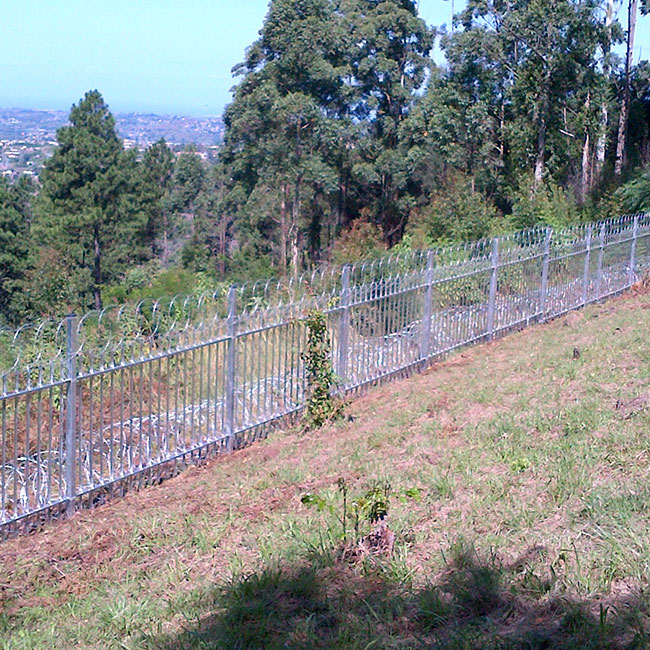
Steel palisade fencing is one of the most common types of perimeter security fencing. Made from high-quality steel, this type of fencing is designed for maximum strength and durability. The steel panels are often coated with protective materials like galvanization or powder coating to prevent rust and weathering. Steel palisade fences are traditionally used in industrial settings, government buildings, and high-security areas due to their robustness and ability to withstand physical attacks.
The defining feature of steel palisade fencing is its high security level. The pointed tips on the vertical posts are designed to deter intruders, while the robust construction of steel panels makes it very difficult to breach. Moreover, steel is a versatile material that can be manufactured in a variety of heights and configurations to suit different needs.
Some notable benefits of steel palisade fencing include:
Strength and security: Steel is inherently strong and difficult to cut or breach, providing an excellent barrier.
Durability: With proper maintenance, steel fencing can last for many years, withstanding extreme weather conditions.
Customizable: Steel can be manufactured to fit specific requirements, including height, color, and additional security features.
Low to moderate maintenance: While steel does require maintenance to prevent rust, especially in coastal areas, it remains relatively easy to care for.
GRP vs Steel Palisade Fencing
When choosing between GRP palisade fencing and steel palisade fencing, it's important to consider various factors such as cost, security needs, and environmental conditions. Below is a detailed comparison of the two materials:
1. Strength and Security
Steel palisade fencing is the winner when it comes to pure strength. Steel is a highly durable and tough material, making it ideal for high-security applications.
GRP palisade fencing, while strong for its material, does not provide the same level of physical security as steel. The material is more suitable for areas where light security and aesthetic appeal are more important than brute strength.
2. Corrosion Resistance
GRP palisade fencing is highly resistant to corrosion, making it perfect for environments that experience a lot of moisture, such as coastal areas or regions with high rainfall. GRP does not rust, which contributes to its low-maintenance benefits.
Steel palisade fencing can be prone to rust if not properly coated or maintained, particularly in salty or humid environments. However, galvanized steel or powder-coated steel can offer a higher level of corrosion resistance.
3. Weight and Installation
GRP palisade fencing is much lighter than steel, which makes installation faster and easier. This can be a huge advantage in situations where time and manpower are limited.
Steel palisade fencing is heavier, and its installation may require more labor and equipment, particularly for larger fences.
4. Cost
Generally, GRP palisade fencing is more expensive initially due to the cost of manufacturing the material. However, its low maintenance and long lifespan can offset these costs over time.
Steel palisade fencing is typically cheaper upfront, but its maintenance costs may increase over time due to the need for rust prevention and repairs.
5. Aesthetic and Customization
GRP palisade fencing comes in a variety of colors and styles, making it an excellent choice for areas where aesthetic considerations are important.
Steel palisade fencing, while customizable, typically has a more industrial look. It is available in different designs and coatings but does not have the same level of visual flexibility as GRP.
6. Maintenance
GRP palisade fencing requires very little maintenance since it does not rust or corrode. Cleaning is usually limited to periodic washing, and there are no concerns about weathering or structural weakening over time.
Steel palisade fencing requires more frequent maintenance, particularly in coastal areas, where rust can be a serious issue. Regular inspections, cleaning, and re-coating may be necessary to maintain its appearance and functionality.
7. Environmental Impact
GRP palisade fencing is made from synthetic materials and may not be as environmentally friendly as steel, which is a recyclable material. However, some GRP fences are made from recycled glass and plastics, contributing to a more sustainable option.
Steel palisade fencing is fully recyclable, which is a significant environmental benefit if you're looking to minimize waste and promote sustainability.
8. Longevity
GRP fencing has a long lifespan, especially in areas with high humidity or coastal salt. However, it may not be as long-lasting as steel in areas where physical impact or vandalism is more likely.
Steel fencing can last for decades with proper maintenance, making it a long-term solution for high-security areas. However, its longevity can be compromised in extreme weather conditions without regular upkeep.
Conclusion
In summary, the choice between GRP palisade fencing and steel palisade fencing largely depends on the environment, security needs, and budget. If you prioritize corrosion resistance and low maintenance, GRP fencing is the ideal solution. However, if maximum security and strength are your top concerns, steel palisade fencing remains the most robust option. By considering the factors discussed in this article, you can select the fencing that best suits your needs, ensuring your property remains secure for years to come.
FAQs
1. Which type of palisade fencing is better for coastal areas?
GRP palisade fencing is the better choice for coastal areas because it is resistant to rust and corrosion caused by saltwater and humidity.
2. Is steel palisade fencing more secure than GRP?
Yes, steel palisade fencing offers superior security because of its strength and durability. Its sharp tips and robust construction make it much harder to breach.
3. Can GRP palisade fencing be painted?
Yes, GRP palisade fencing can be painted to match specific color schemes, allowing for more aesthetic flexibility compared to steel.
4. How often does steel palisade fencing need maintenance?
Steel palisade fencing should be inspected regularly for signs of rust, particularly in coastal or humid environments. If galvanized or powder-coated, it may require minimal maintenance, but general upkeep is necessary to maintain its integrity.
5. What is the lifespan of GRP fencing compared to steel?
Both GRP fencing and steel fencing have long lifespans, but steel can last longer if properly maintained, while GRP may be more durable in specific conditions like high moisture or corrosive environments.


