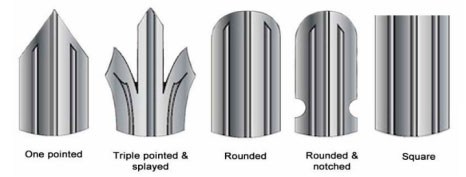
When it comes to securing a property, whether residential, commercial, or industrial, choosing the right type of fencing is crucial. One of the most popular options for creating secure boundaries is palisade fencing, a strong, durable, and highly effective deterrent against intruders. Within the world of palisade fencing, two common designs stand out: W pale and D pale. These two styles have distinct characteristics that make them suitable for different applications.
This article will explore the differences between W pale and D pale palisade fencing, helping you make an informed decision about which one is best for your needs. We'll dive into the specifics of each, compare their advantages and disadvantages, and answer some frequently asked questions to ensure you know exactly what you're getting when investing in palisade fencing.
Key Takeaways
W pale and D pale refer to two different designs of palisade fencing, each with its unique appearance and performance characteristics.
W pale fencing is known for its slightly thicker profile and better resistance to bending and damage.
D pale fencing features a more streamlined and sharp appearance but may not offer the same level of durability as W pale in high-impact situations.
Both fencing styles are highly effective in terms of security, but the choice between W pale and D pale comes down to specific needs such as aesthetic preferences, security requirements, and environmental factors.
What Is W Pale Palisade Fencing?
W pale palisade fencing is a robust and secure type of boundary protection that uses steel pales with a W-shaped profile. The name "W pale" comes from the way the steel pales are designed, resembling the letter "W" when viewed from the side. This design not only provides an appealing look but also enhances the structural strength of the fence.
W pale fencing is highly resistant to bending and deformation due to the reinforced steel profile. It is particularly useful in areas that are prone to vandalism or where a high level of security is required. The W-shaped pales act as a deterrent for intruders, as they can be difficult to climb over or cut through.
Key Features of W Pale Palisade Fencing:
Stronger profile: The "W" shape provides additional strength compared to other pale designs, making it less prone to damage or bending.
Durability: The steel used in W pale fencing is often treated to resist rust and corrosion, making it a long-lasting solution for security.
Visibility: The design of W pale fencing allows for excellent visibility, which is a key factor in ensuring that security personnel can monitor a property effectively.
Benefits of W Pale Fencing:
Increased security: The robust structure of W pale fencing makes it highly effective at deterring intruders.
Longevity: The materials and design make it an investment that can last for decades.
Aesthetic appeal: Its clean, angular design suits both industrial and residential settings.
Common Applications of W Pale Fencing:
What Is D Pale Palisade Fencing?
D pale palisade fencing, on the other hand, features a D-shaped profile. The name comes from the curved, semi-circular design of the pales, which resemble the letter "D" when viewed from the side. While the D pale design provides a more streamlined and aesthetically pleasing look compared to W pale, it may not be as structurally reinforced.
D pale fencing is commonly used where security is important but not as critical as in areas with a higher risk of intrusion or vandalism. The design is slightly lighter than W pale, but it still offers a high level of protection and privacy.
Key Features of D Pale Palisade Fencing:
Sleek appearance: The D-shape gives the fence a more rounded and modern look.
Moderate security: While it offers good protection, it is generally not as tough as W pale in terms of withstanding impact.
Cost-effective: D pale fencing is usually a more affordable option than W pale, which can make it ideal for those on a tighter budget.
Benefits of D Pale Fencing:
Aesthetically pleasing: The smooth curves of the D pale design often provide a more elegant look, suitable for residential areas or light industrial settings.
Cost-effective: D pale fencing is generally less expensive to manufacture and install compared to W pale.
Ease of installation: With a lighter frame, D pale fences are easier and quicker to install than the heavier W pale design.
Common Applications of D Pale Fencing:
Residential properties
Commercial properties with moderate security needs
Parks and recreational areas
Low-security industrial facilities
W Pale vs D Pale
Now that we've defined both W pale and D pale palisade fencing, it's time to compare the two based on several key factors to help you choose the right one for your needs.
1. Security
When it comes to security, W pale fencing takes the lead. Its reinforced W-shaped pales provide greater resistance against bending and cutting, making it the ideal choice for high-security areas. D pale fencing, while still offering good protection, is not as tough as W pale and may be more vulnerable to tampering or vandalism.
W Pale: Higher security, better resistance to impact and cutting
D Pale: Moderate security, less resistant to bending or cutting
2. Aesthetics
The D pale fencing design tends to be more aesthetically pleasing due to its smooth curves and more streamlined look. This makes it a better choice for areas where the visual appeal of the fence is important, such as residential areas or parks. On the other hand, W pale fencing, with its angular design, is typically more utilitarian in appearance.
W Pale: More industrial, functional look
D Pale: Sleek, modern, and aesthetically pleasing
3. Durability
In terms of durability, W pale fencing is the clear winner. The strong, reinforced structure of the W-shaped pales means they are more resistant to damage from external forces. D pale fencing, while still durable, is more vulnerable to bending or deformation, especially in areas with heavy traffic or higher risk of vandalism.
W Pale: More durable, resistant to bending or damage
D Pale: Less durable, more prone to damage under stress
4. Cost
Cost is a significant consideration when choosing between W pale and D pale palisade fencing. Generally, D pale fencing is more cost-effective due to its simpler design and lighter profile. W pale fencing, with its stronger materials and more complex design, tends to be more expensive both in terms of initial installation and long-term maintenance.
W Pale: More expensive, but long-lasting and secure
D Pale: More affordable, suitable for lower security needs
5. Installation
The installation process for both W pale and D pale fencing is relatively straightforward, but D pale fencing is typically easier and faster to install due to its lighter weight and simpler design. W pale fencing, being heavier and more complex, can take longer to install, especially in large areas.
W Pale: Takes longer to install, requires more labor
D Pale: Faster and easier to install
Conclusion
Choosing the right palisade fencing for your property depends on various factors, including security needs, aesthetic preferences, budget, and the environment in which the fence will be installed. W pale fencing is the more robust and durable option, ideal for high-security locations where protection is paramount. In contrast, D pale fencing offers a more visually appealing design at a more affordable price, making it suitable for residential areas or areas with moderate security requirements.
By understanding the differences between W pale and D pale palisade fencing, you can make an informed decision that meets your needs while providing the security and aesthetic appeal your property deserves.
FAQs
1. Which is more secure: W pale or D pale?
W pale fencing is generally considered more secure because of its reinforced structure and greater resistance to impact and tampering. It is the better choice for high-security applications, while D pale fencing offers good security but may not be as tough.
2. Is D pale fencing a good option for residential properties?
Yes, D pale fencing is a great option for residential properties, especially if you're looking for a more aesthetically pleasing fence that offers moderate security. It's also a more affordable choice than W pale fencing.
3. How long does palisade fencing last?
Both W pale and D pale palisade fencing can last for several decades if maintained properly. The longevity of the fence largely depends on factors such as the quality of the materials, environmental conditions, and the level of maintenance.
4. Can I paint my palisade fence?
Yes, both W pale and D pale fences can be painted, though most palisade fences come with a galvanized coating to prevent rust. If you choose to paint your fence, make sure to use weather-resistant paint designed for metal surfaces.
5. Which fence is better for a high-traffic area?
W pale fencing is better suited for high-traffic areas because it is stronger and more resistant to bending or damage. D pale fencing may show signs of wear and tear more quickly in such areas.


