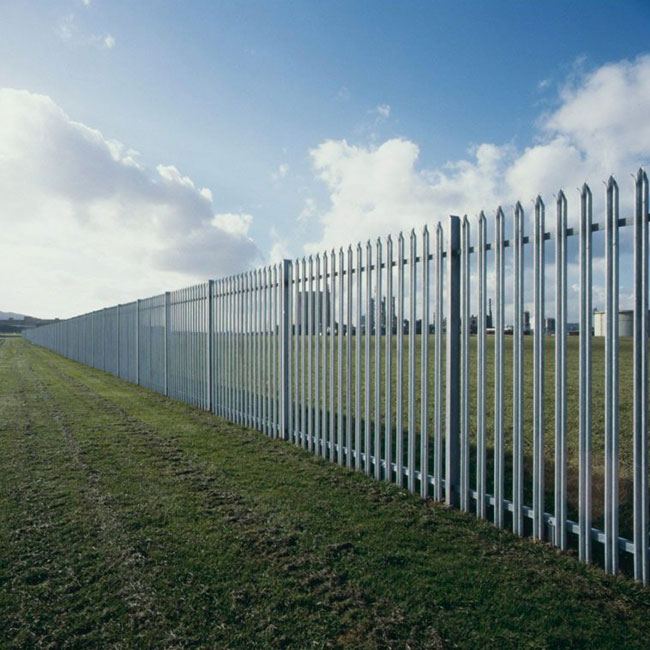
Is your palisade fence truly secure — or just steel in disguise? In an industry where strength equals safety, it's not enough for a palisade fence to “look tough.” Real protection comes from compliance with internationally recognized benchmarks — starting with British Standards.
With increasing threats to critical infrastructure, schools, and industrial facilities, there's no room for compromise. Poor-quality security fencing may look the part but can fail under real-world pressure. That's why understanding and implementing BS (British Standards) in palisade security fencing is no longer optional — it's essential.
In this post, you'll learn why British Standards matter, what specific standards apply to palisade fence systems, how to verify supplier compliance, and which applications demand BS-rated fencing. We'll also provide technical comparisons, data-driven insights, and best practices to help you choose the right solution and partner.
Key Takeaway
| Topic | Summary |
| British Standards | Provide strict guidelines for design, material, and installation of palisade fencing. |
| Why It Matters | Ensures long-term durability, legal compliance, and maximum security performance. |
| Where It Applies | Mandatory in many public, industrial, and high-security projects in the UK and abroad. |
| How to Verify | Request BS certificates, third-party test reports, and supplier documentation. |
What Are British Standards?
British Standards (BS) are technical specifications developed by the British Standards Institution (BSI) to ensure product safety, performance, and reliability. These standards cover thousands of categories — from consumer electronics to construction materials — and are frequently referenced in public procurement and global trade.
For the fencing industry, BS standards provide clear, enforceable benchmarks for:
Products that conform to relevant BS criteria are considered fit for purpose, especially in regulated markets like the UK, EU, and Commonwealth countries.
Why Do British Standards Matter For Palisade Security Fencing?
In the context of palisade fence systems, British Standards do more than set minimum thresholds — they define excellence. Here's why:
1. Enhanced Security Performance
A BS-compliant palisade fence is designed to resist intrusion, withstand extreme weather, and deter tampering. Features like anti-climb profiles, thicker steel sections, and robust fixings are all part of the standard.
2. Project and Legal Compliance
Many government and infrastructure projects in the UK and abroad explicitly require BS 1722-12-compliant palisade fencing. Non-compliance can lead to project disqualification or safety violations.
3. Long-Term Durability
BS standards specify corrosion protection (e.g., via hot-dip galvanization to BS EN ISO 1461) and powder coating performance. This ensures your palisade fence lasts 20–30 years with minimal maintenance.
4. Customer Confidence
Whether you're bidding for a municipal project or securing a private utility site, a BS-certified fence builds trust. It tells clients you're serious about quality and safety.
5. Competitive Advantage
In export markets — especially the UK, Middle East, and Africa — BS compliance is a selling point. It differentiates your palisade fence from cheaper, non-compliant alternatives.
What Are The British Standards For Palisade Fencing?
The most important standard for palisade fence in the UK is:
BS 1722-12:2006
"Fences - Specification for steel palisade fences"
This standard covers:
| Component | Requirement |
| Steel Section | Angle or "W" or "D" profiles, min. thickness 3.0mm |
| Panel Height | Typically 1.8m – 3.6m |
| Fixings | Tamper-proof bolts and rivets |
| Finish | Hot-dip galvanized to BS EN ISO 1461 |
| Coating | Optional powder coating (BS EN 13438 compliant) |
| Installation | Concrete-in or bolt-down posts with spacing ≤ 2.75m |
Other related standards:
BS EN ISO 1461 – Hot-dip galvanized coatings on fabricated iron and steel articles.
BS EN 13438 – Performance requirements for powder organic coatings on galvanized steel.
BS EN ISO 9001 – Quality management systems (should be held by the manufacturer).
Example Technical Comparison
| Feature | BS-Compliant Fence | Non-Compliant Fence |
| Steel Thickness | 3.0mm | 2.0mm – 2.5mm |
| Galvanization | ≥ 70μm (ISO 1461) | 40–50μm or none |
| Coating | Optional powder (BS EN 13438) | Paint or none |
| Fixings | Anti-tamper | Standard bolts |
| Lifespan | 25+ years | 10–15 years |
Common Applications Requiring BS-Compliant Palisade Fencing
Certain industries and environments require or strongly recommend fences that comply with BS 1722-12 due to the associated security and durability benefits.
Industrial Facilities
Power stations
Water treatment plants
Factories and warehouses
Government and Public Sector
Military bases
Police stations
Municipal buildings
Transport Infrastructure
Airports
Railways
Harbors and ports
Education & Healthcare
Schools and academies
Universities
Hospitals
Construction Sites
Export Markets
The UK and Commonwealth countries (UKCA/CE marking relevance)
Middle East (especially infrastructure projects in UAE, KSA)
Africa and Europe (where BS or EN standards are referenced)
How to Verify If Your Supplier Meets BS Standards
Buying a palisade fence is a major investment. Here's how to ensure your supplier is truly BS-compliant — not just saying so.
✅ 1. Request Official Certifications
Ask for:
✅ 2. Inspect Product Specifications
Ensure:
✅ 3. Confirm Testing Procedures
Look for:
✅ 4. Visit the Factory or Request Video Inspection
A reputable supplier like JiaoRong will offer:
Full transparency about production
Access to plant videos or digital showrooms
Sample panels with documentation
✅ 5. Review Project Case Studies
Ask:
Have they supplied for UK or government projects?
Do they have photos, specs, and client references?
Conclusion
British Standards aren't just paperwork — they're the foundation of true perimeter security.
Choosing a BS-compliant palisade fence ensures:
Legal and project compliance
Long-lasting durability
Enhanced resistance against intrusion
Greater confidence from clients and authorities
Whether you're a contractor, project manager, or procurement officer, choosing a British-Standard palisade fence is a smart, future-proof investment. And if you're looking for a reliable supplier — choose one that understands the BS 1722-12 standard inside out.
JiaoRong offers premium steel palisade fencing solutions engineered for maximum protection, durability, and compliance. To learn more or get a quote, contact us here.
FAQs
Q1: What is the minimum steel thickness for BS-compliant palisade fencing?
A: According to BS 1722-12, the steel thickness should be a minimum of 3.0mm for pales and posts.
Q2: Is powder coating required by British Standards?
A: Powder coating is not mandatory but is highly recommended for additional protection and aesthetics. Coatings should meet BS EN 13438.
Q3: What's the expected service life of a BS-compliant palisade fence?
A: With proper galvanizing and installation, service life can exceed 25 years.
Q4: Can I export BS-compliant fencing to the UK?
A: Yes. BS compliance is often required for UK projects. Ensure your supplier supports UKCA or BSI documentation.


